Blue Light Glasses Vs Computer Glasses: Which Should You Choose?
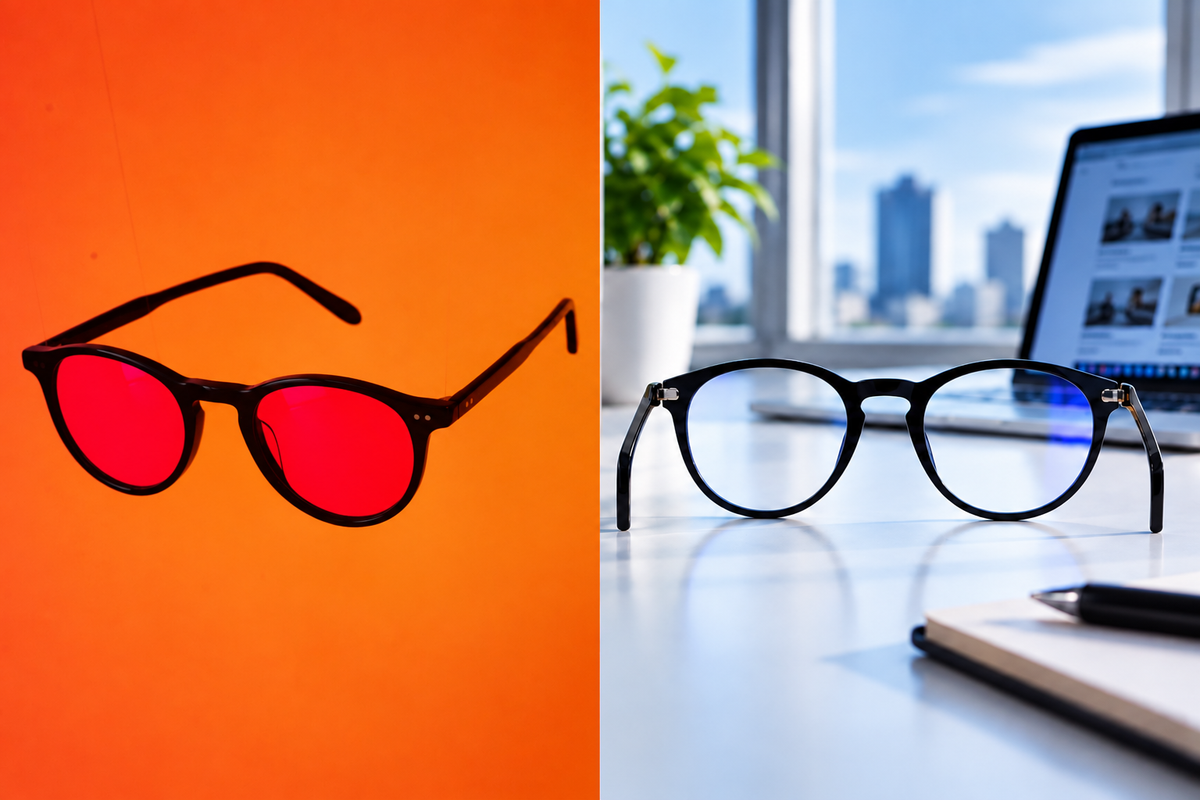
The terms "blue light glasses" and "computer glasses" are often used interchangeably. This is such a common occurrence that most people assume they're the same product with two different names. But in reality, they're not. The confusion behind blue light glasses vs computer glasses usually comes down to one thing: one type filters the light reaching your eyes, and the other changes how hard your eyes work to focus at screen distance. These are two different jobs and two different problems.
This guide breaks down what each type of glasses actually does. Below, we have compared blue light and computer glasses side by side, discussed who benefits most from each, and more.
Key Takeaways
-
Blue light glasses filter selected blue light wavelengths. Computer glasses are designed around the visual demands of working at screen distance.
-
Some computer glasses provide blue light filtering as an added feature. However, it's not their main job.
-
Blue light blocking glasses come in daytime (clear) and evening (tinted) versions. SOMNISE glasses are designed for evening use.
-
The right choice depends on your goal: evening wind-down or daytime computer use.
-
You can use both types of glasses. They're not competing for the same job.
What are Blue Light Glasses?
Blue light-blocking glasses are lenses with a coating or tint designed to filter selected wavelengths of blue light. That section of the visible light spectrum is most associated with digital screens, LED bulbs, and daylight.
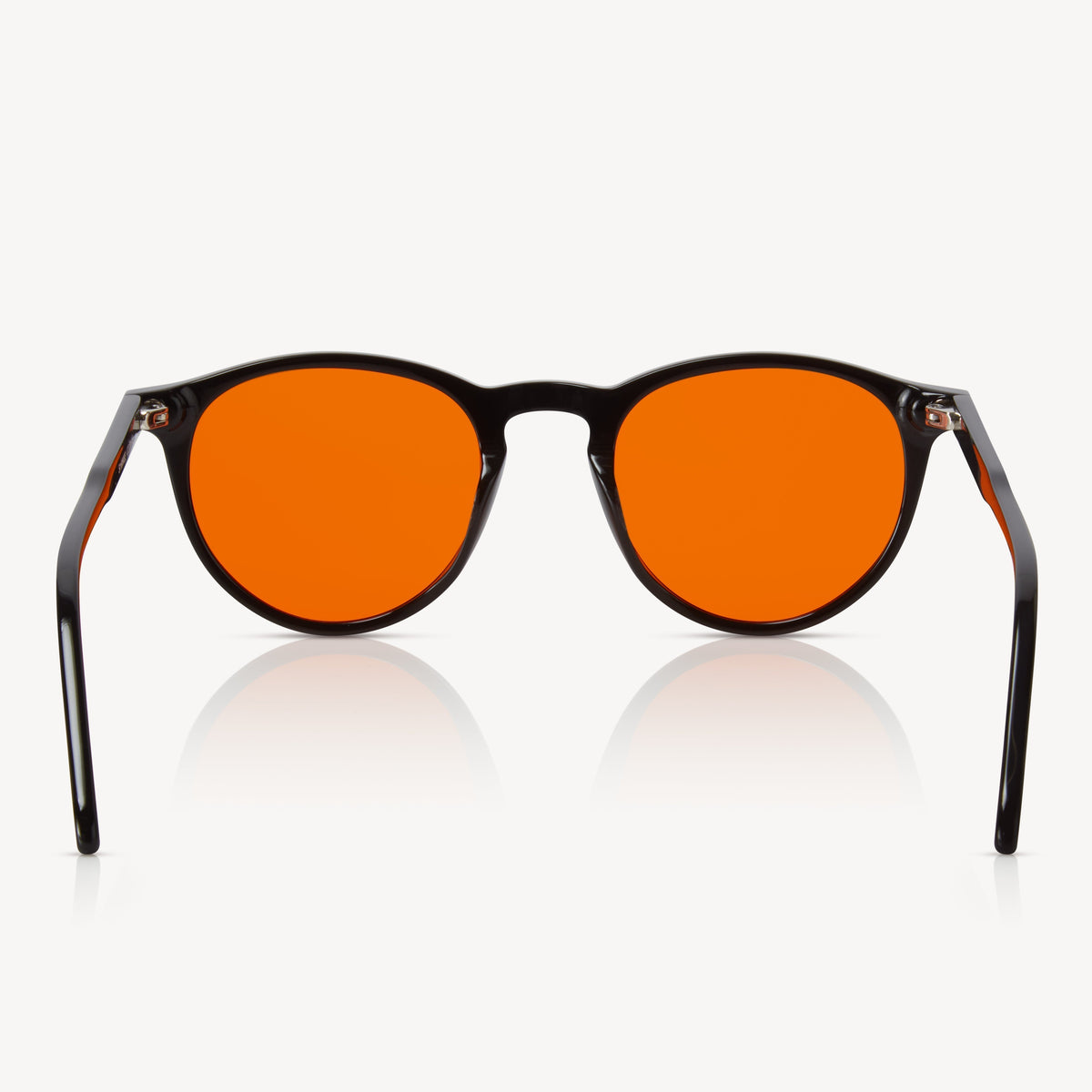
Glasses that block blue light come in two broad types: daytime and evening versions. Daytime versions have a clear or lightly tinted lens. These glasses are worn during the day while using a digital device that emits blue light. Evening versions, on the other hand, carry an amber or red tint and block a much larger share of blue light. They're built to be worn in the hours before bed, when you're winding down after a long day.
That distinction matters because blue light plays a role in the body's circadian system. Controlled studies have shown that short-wavelength light can suppress melatonin, while evening exposure to LED-backlit screens has been shown to affect melatonin and alertness under laboratory conditions (Cajochen et al., 2011; West et al., 2010). A small randomised controlled trial by Shechter et al. (2018) also found that wearing amber-tinted blue-blocking glasses for two hours before bed improved measures of sleep duration and quality in people with insomnia symptoms compared with clear-lens control glasses.

What are Computer Glasses?
Computer glasses are a broader category than blue light glasses. Some use lenses designed for intermediate viewing distances, some incorporate anti-reflective treatments, and some also include blue light filtering as an additional feature. The exact design depends on the wearer's visual needs and how the glasses are intended to be used.
Lens power is an important feature of many glasses designed for computer use. Unlike regular prescription glasses that are usually set for distance vision or close-up reading, computer glasses are generally powered for the distance between your eyes and a computer screen. That's further than reading distance but closer than most everyday prescriptions account for, which makes that power adjustment important.
Computer glasses often get compared to reading glasses. After all, both use lens power to ease focusing effort. However, there is a major difference between the two. Reading glasses are usually set for close-up distances of around 14 to 16 inches. Computer glasses sit further out, closer to the 20 to 26-inch distance between your eyes and a computer screen. If you use reading glasses on computer monitors, you can find text blurry, since the power doesn't match the distance. This is why some people find they need computer glasses or reading glasses for different tasks rather than assuming one pair covers both.
Computer glasses may be useful for people who spend extended periods working at a computer, particularly where their existing prescription isn't suited to their screen distance. An optometrist can assess your vision, working distance and screen setup and advise whether dedicated computer glasses would be appropriate.
Blue Light Glasses vs Computer Glasses: The Differences That Matter
The difference between computer glasses and blue light glasses comes down to what they're solving for, not which one wins. The following table shows how they compare.
| Feature | Blue Light Glasses | Computer Glasses |
|---|---|---|
| Primary purpose | Filter blue light wavelengths | Support visual needs at screen distance |
| What it targets | Light spectrum reaching the eye | Working distance and visual requirements |
| Typical lens tint | Clear (daytime) or amber/red (evening) | Usually clear |
| Best-suited time | Daytime or evening, depending on tint | During screen-heavy work hours |
| Common use case | Evening wind-down, shift work, screen-heavy evenings | Full workdays at a desk |
| Can overlap? | Some include anti-glare coating | Some include blue light filtering |
Which One is Actually Built for You?
Match the glasses to the problem instead of trying to work out which one is objectively superior. Think about times when you're using screens and what symptoms you're actually noticing, and let these factors guide your decision, rather than picking whichever pair of glasses has the most convincing marketing.
Blue Light Glasses Suit:
-
Evening screen use: anyone using a phone, tablet, or laptop in the hour or two before bed or who feels tired but wired at night.
-
Wind-down routines: people looking to reduce short-wavelength light exposure as part of their evening routine.
-
Shift workers: a pilot study involving permanent night-shift workers found improvements in daytime sleep when blue-blocking glasses were worn towards the end of the night shift and during subsequent daytime light exposure (Sasseville et al., 2009).
Computer Glasses Suit:
-
Long screen days: people who spend extended periods working at a computer.
-
Visual discomfort during screen work: people experiencing difficulty seeing comfortably at their normal screen distance, particularly where an existing prescription may not be suited to intermediate vision.
-
Desk-based roles: writers, programmers, analysts, and other jobs built around extended screen time.
Looking for an evening option? Explore our blue light glasses for men and women, designed specifically for use before bed.
Where SOMNISE Fits
SOMNISE glasses are built for one job: evening screen use, not getting through a workday. The focus is on the hours before bed.
That focus is backed by SOMNISE's own sleep research. In a 28-day study of the Holon Sleep Box, 31 participants tracked their sleep across 831 nights. The study was advised by a researcher affiliated with Brigham and Women's Hospital and Harvard Medical School. Across the study, participants slept 21 minutes longer on average, and 8 in 10 reported better rest quality, with the overall results reaching statistical significance (p<0.001).
Plus, every batch of SOMNISE glasses is independently tested to block 99.994% of blue light in the 380–500nm range.
None of this means SOMNISE glasses replace prescription computer glasses during the day. If your main concern is visual discomfort while working, an optometrist can assess whether your prescription, screen distance or other factors are contributing and whether dedicated computer glasses would be appropriate.
Can You Wear Both Computer Glasses and Blue Light Glasses?
You can use computer glasses and blue light glasses at different points in the day because they're designed around different needs. For someone who requires computer-specific correction, that could mean computer glasses during working hours and evening blue light glasses in the hours before bed.
One doesn't necessarily replace the other. Blue light filtering doesn't automatically provide the intermediate-distance correction someone may need for computer work, while prescription computer glasses don't necessarily provide the level of blue light filtration associated with dedicated evening lenses.
For extended screen time, the 20-20-20 rule is a simple habit worth following: every 20 minutes, look at something 20 feet away for at least 20 seconds. It gives your eyes a break from constant near-focus, no matter what glasses you're wearing.
The Question Worth Asking Before You Buy
The right choice between blue light glasses and computer glasses depends on what you're trying to address. If evening screen use is the concern, blue light glasses designed for that specific window may fit naturally into your wind-down routine. If you're experiencing visual discomfort during computer work, an eye examination can help determine whether your prescription, screen distance or another factor needs addressing.
The two aren't mutually exclusive. Someone who needs computer-specific correction during the working day may still choose dedicated blue light glasses for evening use. The important thing is matching the lenses to their intended purpose rather than expecting one pair to do everything.
If your evenings are the part you want to address first, shop SOMNISE's blue light glasses and find a pair built for winding down, not working through.
FAQs
Which is better, computer glasses or blue light glasses?
Neither is universally better because they're designed around different needs. Computer glasses can be prescribed for the intermediate viewing distance used during computer work, while blue light glasses filter selected wavelengths of light. If you're experiencing eye strain, headaches or difficulty focusing while working, an optometrist can help determine whether your prescription or screen setup needs adjusting. If your focus is managing evening light exposure, dedicated evening blue light glasses serve a different purpose.
Are blue light glasses computer glasses?
Not necessarily, though the terms get used interchangeably. Some computer glasses include blue light filtering as a feature, alongside anti-glare coating and a lens power set for screen distance. A dedicated pair of blue light glasses may only filter light without the intermediate-distance correction that some computer glasses provide. Daytime blue light glasses overlap most closely with computer glasses, since both are worn during daytime screen use. Evening-tinted blue light glasses sit in a different category and aren't typically described as computer glasses, as their main purpose is to improve sleep.
Should I wear blue light glasses if I work on a computer all day?
It depends on what you're trying to address. If working at a computer leaves your eyes fatigued or uncomfortable, blue light isn't necessarily the cause. Your prescription, viewing distance, screen setup, blinking and regular breaks can all be relevant. An optometrist can assess persistent symptoms. SOMNISE, meanwhile, is designed specifically for evening rather than all-day screen use.
What are the disadvantages of blue light glasses?
Evening-tinted lenses with amber or red shades noticeably change how colours look, since they filter out a large share of the light spectrum. This is not something that everyone enjoys. Clear daytime glasses filter less blue light, so while they give you milder colour distortion, the filtering is weaker. And no glasses replace basic screen habits, good lighting, or regular breaks during long stretches of digital device use. All of these still matter regardless of what you're wearing.
Sources
-
Holon Sleep Study (SOMNISE): https://cdn.shopify.com/s/files/1/0686/0682/0514/files/HOLON_SLEEP_STUDY_revised.pdf
-
Cajochen, C. et al. (2011). Evening exposure to a light-emitting diodes (LED)-backlit computer screen affects circadian physiology and cognitive performance: https://pubmed.ncbi.nlm.nih.gov/21415172/
-
West, K. E. et al. (2010). Blue light from light-emitting diodes elicits a dose-dependent suppression of melatonin in humans: https://pubmed.ncbi.nlm.nih.gov/21164152/
-
Shechter, A. et al. (2018). Blocking nocturnal blue light for insomnia: A randomized controlled trial: https://pubmed.ncbi.nlm.nih.gov/29101797/
-
Sasseville, A. et al. (2009). Wearing blue-blockers in the morning could improve sleep of workers on a permanent night schedule: A pilot study: https://pubmed.ncbi.nlm.nih.gov/19637050/