

How to Choose the Best Blue Light Blocking Glasses in the UK
If you search on Google for the best blue light blocking glasses UK shoppers can buy, you'll get hundreds of listings within seconds. Every product page delivers a similar message: the glasses help to filter blue light from mobile and computer screens, reduce eye strain, and help you sleep better. Some of that is true. Some of it is a confident label.
But here's the thing: not every pair of glasses that block blue light does what the packaging promises. Blockage percentages and testing standards vary, and not all brands can back their claims with real data. Only some do.
This guide walks through the five things that actually separate a well-made pair from a generic one: testing, the quality of the lens, comfort, frame materials, and transparency. By the time you reach the FAQs, you'll know exactly what to check before you start shopping for blue light glasses. We will also show how SOMNISE approaches each of these criteria, including independent testing, lens performance and product transparency.
Key Takeaways
-
Testing matters more than the number you see being advertised. Independent lab verification counts for more than the percentage printed on the box.
-
Wavelength range counts too. Glasses tested across a broader range of blue-light wavelengths provide more information than ones tested across only a narrow portion of the spectrum.
-
Lens tint changes the trade-off. A clear lens keeps the colours accurate, while an amber lens filters more blue light but shifts the colour tint of the screen.
-
Frame weight decides whether you actually wear them. If your glasses are comfortable, you are more likely to use them every day. Heavier ones are uncomfortable and end up in a drawer without much use.
-
Transparent brands publish their data. Named studies and batch checks reveal far more than flashy marketing language ever will.

What Makes the Best Blue Light Blocking Glasses in the UK?
The best pick for blue-light-blocking glasses is the one that is independently verified to filter what it claims, across the wavelengths that actually affect your sleep.
Evening blue light exposure suppresses melatonin, the hormone that signals your body it's time to wind down. That's the mechanism blue light glasses are built around, and it's why both timing and wavelength coverage matter: glasses worn in the hours before bed only help if they're actually blocking the wavelengths responsible for that suppression.
Here's how to check that a pair genuinely does this, starting with the single biggest signal: how the glasses were tested.
1. Check Independent Testing
Before you go ahead and buy blue-blocking glasses, ask one question: How was this tested? If the answer is a vague percentage with nothing backing it up, that's your first red flag.
One reliable way to measure how much blue light a lens actually blocks is a spectrophotometer test. It measures the light transmission across the full spectrum rather than relying on a screen glare test or a pen-torch demonstration. Here's why it is the gold standard test: it shows how much blue light the lens is blocking and across which wavelengths. The others simply show that a lens is doing something.
2. Lens Quality and the Wavelength Range That Matters
Blue light covers a range of short wavelengths within the visible light spectrum, although the exact boundaries used can vary. A lens tested across only a narrow wavelength range does not tell you how it performs across wavelengths outside that tested range.
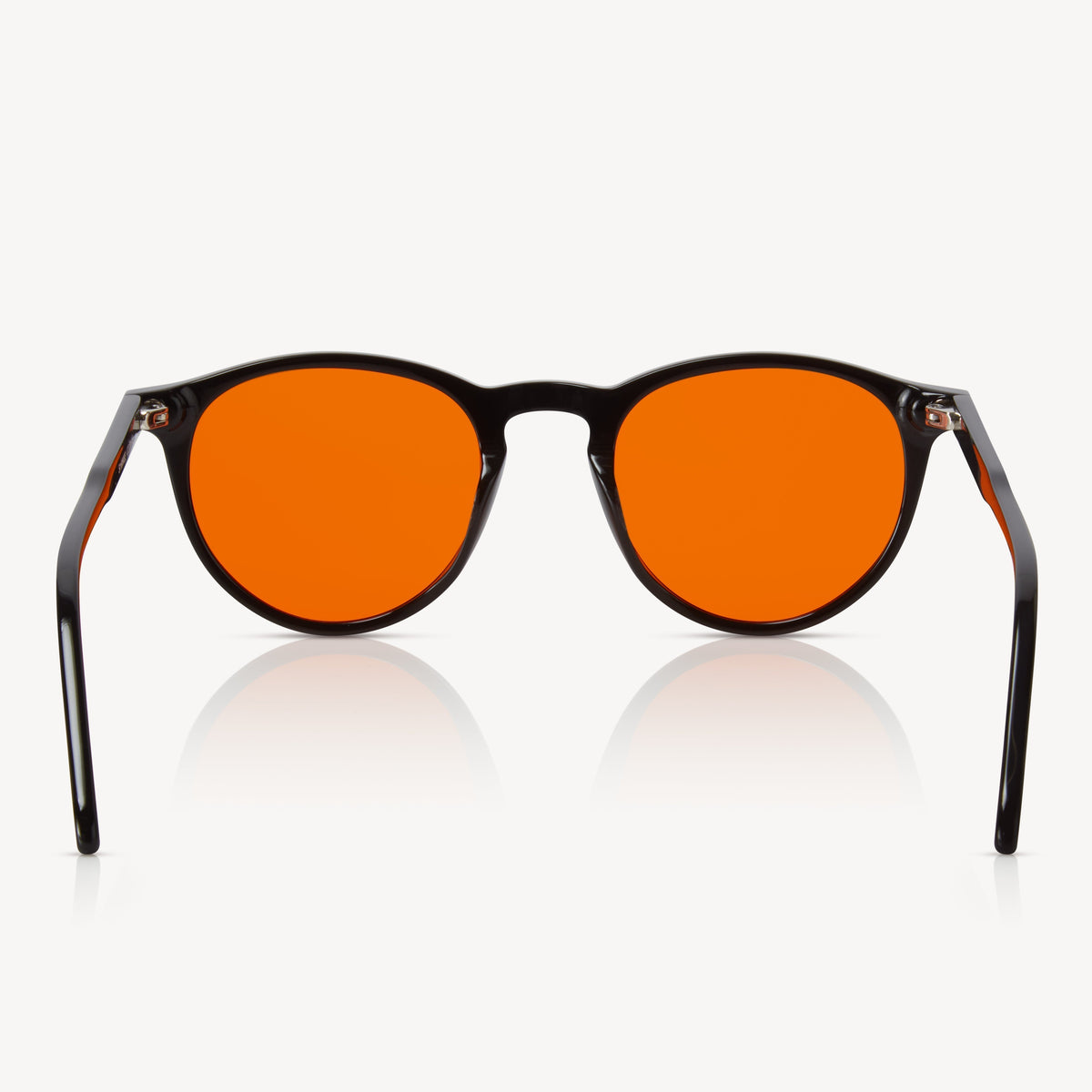
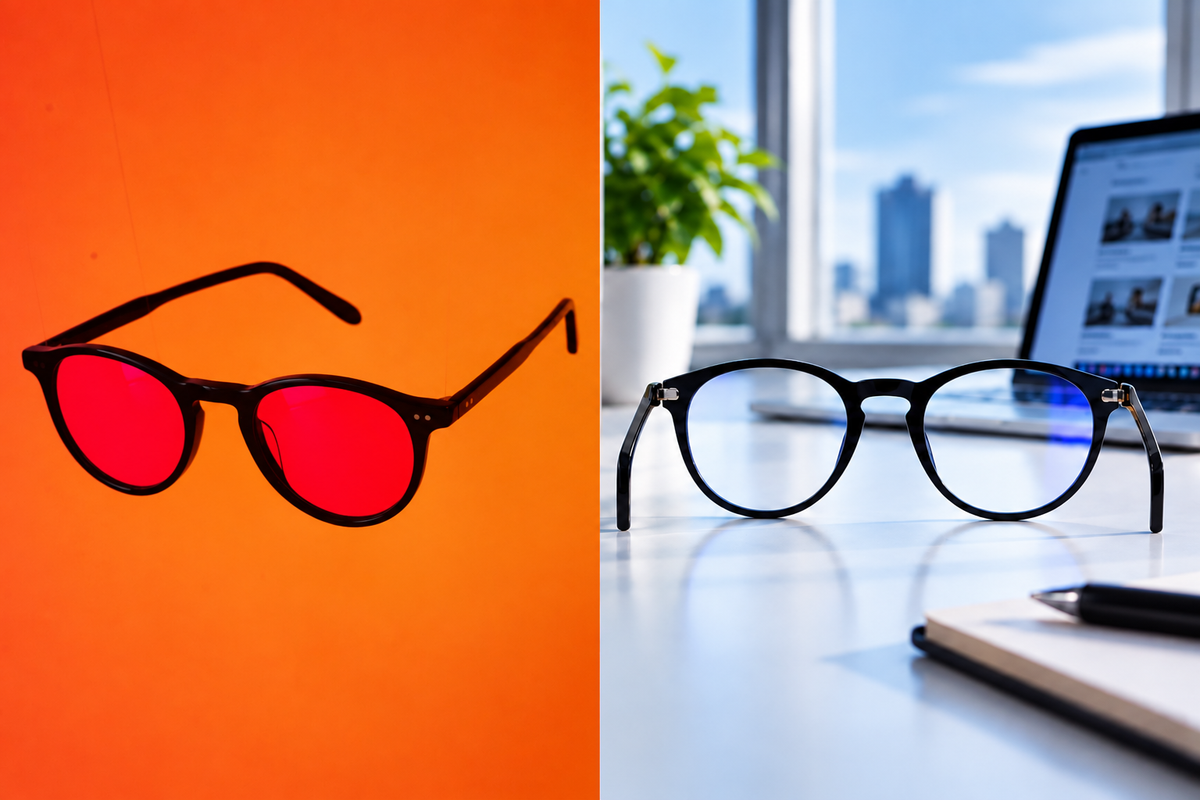
The tint on the lens plays a role, too. A clear lens uses a coating to filter out part of the spectrum while keeping colours close to true. This suits daytime computer glasses and video calls. On the other hand, an amber lens absorbs more of the spectrum, which is more important in the evening and shifts how white looks on screen. This makes such lenses the more common choice for managing blue light at night.
Whichever brand you're considering, check which wavelengths it has actually been tested to block instead of just relying on a hollow headline percentage. SOMNISE lenses are independently tested to block 99.994% of blue light across the 380–500 nm wavelength range.
3. Comfort and Fit for Extended Wear
Even if a pair of glasses filters out blue light perfectly, it will be of little use if you take them off after using them for twenty minutes. Comfort decides whether you actually wear your glasses, and fit decides comfort.
Check these three things before you buy:
-
The bridge should sit on your nose without pinching or sliding down.
-
The arms should reach past your ears and rest without digging in.
-
The overall weight should feel light enough to forget by hour two.
If you're browsing blue light filtering glasses UK sites for online shopping, measure the lens width, bridge width, and arm length of a pair of glasses you already own. Compare those numbers against the product listing. It's the closest thing to trying it on before you buy.
For evening use specifically, when glasses might sit on your face for the full 2–3 hours before bed, the weight matters even more than it does for brief daytime uses.
4. Frame Materials: Premium Versus Generic
The frame material affects how glasses feel after hours of wearing them and how long they last. The standard choice for premium frames is acetate. It's a plant-based plastic that holds its shine and shape and distributes weight more evenly than cheaper alternatives.
Generic glasses, like the ones you can find in bulk listings for a few pounds, are usually moulded from a single piece of lightweight plastic. They are fine for a few weeks but soon start to loosen at the hinges. This leads to more frequent replacements than a properly made pair.
This isn't a claim about how the glasses perform optically. It's a practical one. A frame that has a higher upfront cost but survives daily wear for years costs less over time than one you need to replace every few months.
5. Transparency: How to Spot a Credible Brand
A transparent brand shows its workings. That means they share published test data, named studies with real sample sizes and authors, and clear descriptions of exactly what was tested rather than vague reassurances about their blue light filtering glasses.
Watch for brands that state a blockage percentage with no evidence behind it, or those that lean on phrases like "clinically proven" without named trials. Neither is illegal, but both deserve more questions before you buy.
Run through this quick checklist before buying blue light glasses from any brand:
| What to look for | Red flag |
|---|---|
| Independently verified test data (spectrophotometer results) | A blockage percentage with no testing evidence behind it |
| Broad wavelength range clearly stated and tested | Only a narrow slice of the spectrum tested |
| Named studies with sample size and authors | Vague claims like "clinically proven" with no named trial |
| Batch-level consistency checks | No information on manufacturing consistency |
| Frame materials clearly disclosed | No material specification given anywhere |
If a brand can't answer these points, that's worth knowing before you spend your money. Through independent verification, SOMNISE lenses are shown to filter 99.994% of blue light across the 380–500 nm range. The glasses were also included in SOMNISE's 28-day Holon Sleep Box study, which was advised by a researcher affiliated with Brigham and Women's Hospital and Harvard Medical School.
Final Word: The Five Questions Worth Asking First
At the end of the day, choosing the best blue light blocking glasses comes down to five things: independent testing, wavelength range and lens quality, comfort, frame material, and brand transparency. None of it requires you to take anyone's word for it. Any brand worth buying from should be able to answer these questions without hesitation.
If you'd like to see this blue light protection in practice, SOMNISE's collection is independently tested across the 380–500 nm range. Browse the best sellers or explore men's and women's frames to find the fit that works for you.
Frequently Asked Questions About Blue Light Glasses
How to choose blue light glasses of the best quality?
Before buying blue light glasses, check for factors like independent testing, the wavelength range tested, lens tint, comfort and fit, and how transparent the brand is about its supporting evidence. A percentage on the box may look promising, but it means little without reliable testing behind it. Once a brand shows its data, it's about matching the lens colour to your use case and finding a frame you'll actually wear.
How can I tell if blue light glasses are good quality?
A rough at-home check is to hold the lens over a white screen background. If it looks noticeably yellow or amber, it's filtering something, but that won't tell you how much or across which wavelengths. The only way to know that reliably is a spectrophotometer test, so ask the brand for its data. If a company is willing to show you the evidence, it is a reassuring indicator of good-quality glasses.
What glasses block 100% of blue light?
Some glasses are marketed as blocking 100% of blue light, but it's important to check the wavelength range behind that claim. SOMNISE is independently tested to block 99.994% of blue light across the 380–500 nm range, with every batch verified. Always check that the percentage of blue light filtered comes from independent testing with the tested wavelength range clearly stated, rather than just a marketing claim.
How much blue light is too much?
There's no single agreed figure for how much blue light exposure is "too much," and screens emit far less than daylight does. What research points to more consistently is timing rather than volume. Exposure to blue light in the 2–3 hours before bed is most closely linked to delayed melatonin release and shifted sleep timing, regardless of the exact amount.
What are the disadvantages of blue light blocking glasses?
Tinted lenses shift how colours look on screen, which matters for things like photo editing or other colour-sensitive work. They add a cost on top of any prescription glasses you already wear. Moreover, they're not a substitute for good sleep habits: a consistent bedtime and a wind-down routine still matter more than any single blue light lens product.
Can I use sunglasses as blue light glasses?
Not reliably. Sunglasses are primarily designed to provide UV protection and reduce overall brightness. This is different from specifically filtering short-wavelength visible light. Some very dark sunglasses may filter some blue light as a side effect, but without testing data there's no way to know how much or across which wavelengths. If evening use is the goal, look for glasses with clearly reported wavelength-specific testing.
When and how often should I wear blue light glasses?
Daily wear is generally considered fine, since these glasses simply filter part of the visible light spectrum rather than doing anything more invasive. For screen use during the day, the more common choice is clear or lightly tinted lenses, whether in computer glasses, gaming glasses, or a reading pair with a blue light coating. For evening use, most of the sleep-related research focuses on wearing amber or tinted lenses in the 2–3 hours before bed, which is the window most closely tied to melatonin timing.
Which is the best brand in the UK for buying blue light glasses?
SOMNISE. The best brands provide spectrophotometer testing, clearly state the wavelength range tested, name studies behind any sleep or eye-health claims they make, and disclose their frame materials. SOMNISE meets each of these, with independent batch testing and its 28-day Holon Sleep Box study, which was advised by a researcher affiliated with Brigham and Women's Hospital and Harvard Medical School.
Sources
-
Shechter et al. (2018) — Blocking nocturnal blue light for insomnia: A randomized controlled trial
-
Burkhart & Phelps (2009) — Amber lenses to block blue light and improve sleep: a randomized trial
Read more
If you've looked into blue light glasses, you've probably come across a lot of different information. Some sources say they help with reducing screen glare, eye strain and sleep quality. So do blue...
The terms "blue light glasses" and "computer glasses" are often used interchangeably. This is such a common occurrence that most people assume they're the same product with two different names. But...